Frozen Pipes
Frozen pipes? Thaw them safely
A frozen pipe is a burst pipe waiting to happen. Here's how to spot the signs, thaw it safely without cracking it, and stop it from freezing again, plus exactly what to do if one has already let go and flooded your home. We connect you with restoration crews 24/7 across the US.
No obligation · Insurance-friendly · Independent licensed & insured local companies
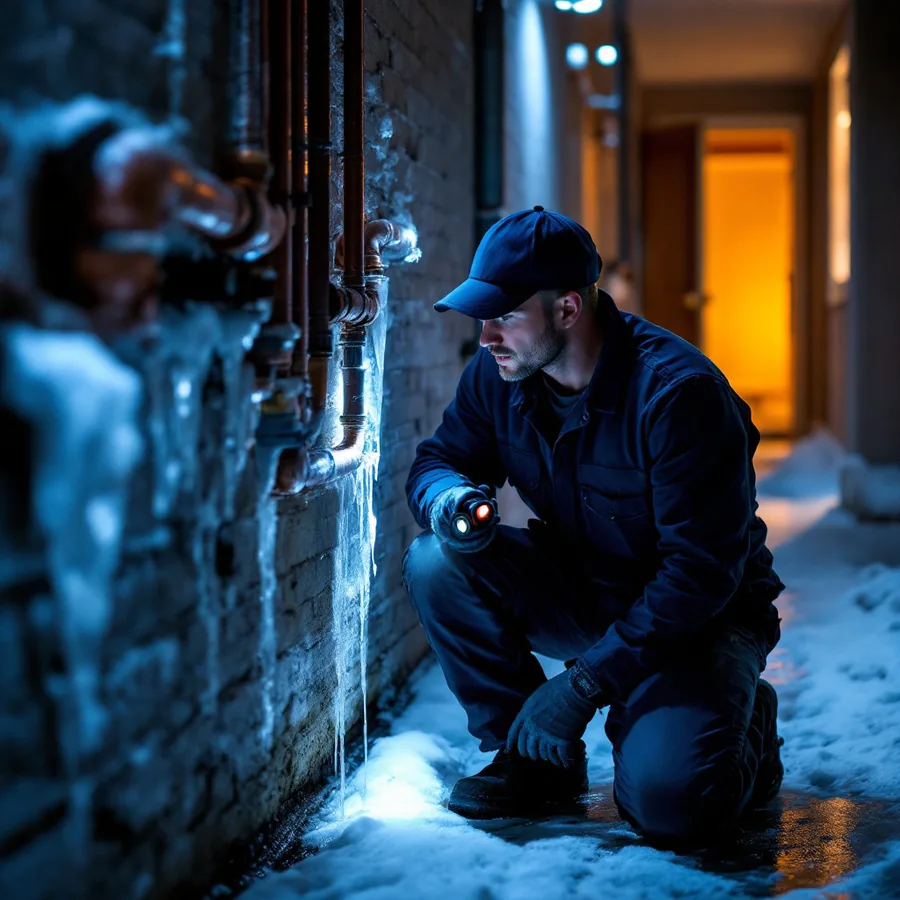 Frozen today, burst tomorrow
freezing here
This page is the calm version of a cold-weather emergency. If a pipe has already burst and water is spreading, skip ahead, shut your main valve and call us, then read our burst pipe steps. New to us? See how we work.
Is A Pipe Frozen?
The signs of a frozen pipe
Catching a freeze early , before it cracks, is the whole game. In cold weather, watch for these:
No water from a faucet
You turn on a tap in cold weather and get only a trickle or nothing at all. If it's just one faucet, its supply pipe is likely frozen somewhere upstream.
Frost on the pipe
Visible frost or heavy condensation on an exposed pipe in a basement, garage or under a sink is a clear sign ice is forming inside.
A bulge in the pipe
Ice expands, so a section that looks swollen or bulged is under pressure and close to splitting. Treat it as urgent.
Strange sounds
Gurgling, clanking or whistling when you run water can be air and ice moving through a partly frozen line.
A bad smell
A sewage or musty odor from a drain or faucet can mean a frozen section is forcing odors back up the line instead of out.
It's below freezing
The simplest sign of all, a hard cold snap, especially with wind, on a home with any exposed or under-insulated plumbing.
The Number Everyone Asks
At what temperature do pipes freeze?
The widely used rule of thumb is the 20°F (-6°C) "temperature alert threshold." That's when exposed and under-insulated pipes are genuinely at risk, but the number isn't the whole story.
- Exposure matters more than the number. A pipe in an unheated attic, crawlspace, garage or exterior wall can freeze well before a well-insulated interior pipe.
- Wind chill counts. Cold air moving through a vent or gap pulls heat out of a pipe far faster than still air at the same temperature.
- Duration counts. A brief dip to 20°F is less dangerous than a long, steady freeze that lets the cold soak all the way into the pipe.
Watch the 20°F mark
When the forecast drops toward 20°F, take action the night before: let exposed faucets drip, open cabinet doors, and keep the heat on. The prep costs nothing next to a flooded home.
See prevention stepsDo It Right
How to thaw a frozen pipe safely
The goal is to melt the ice gradually while giving the water somewhere to go, so the pipe doesn't crack and nothing catches fire. Work in order.
1. Open the faucet
Open the faucet the frozen pipe feeds, both hot and cold sides. A trickle of running water melts the ice faster and relieves the pressure that causes bursts.
2. Find the frozen spot
Follow the pipe from the faucet to the frozen section, usually where it runs through an unheated wall, attic or crawlspace. Look for frost or a bulge.
3. Apply gentle heat
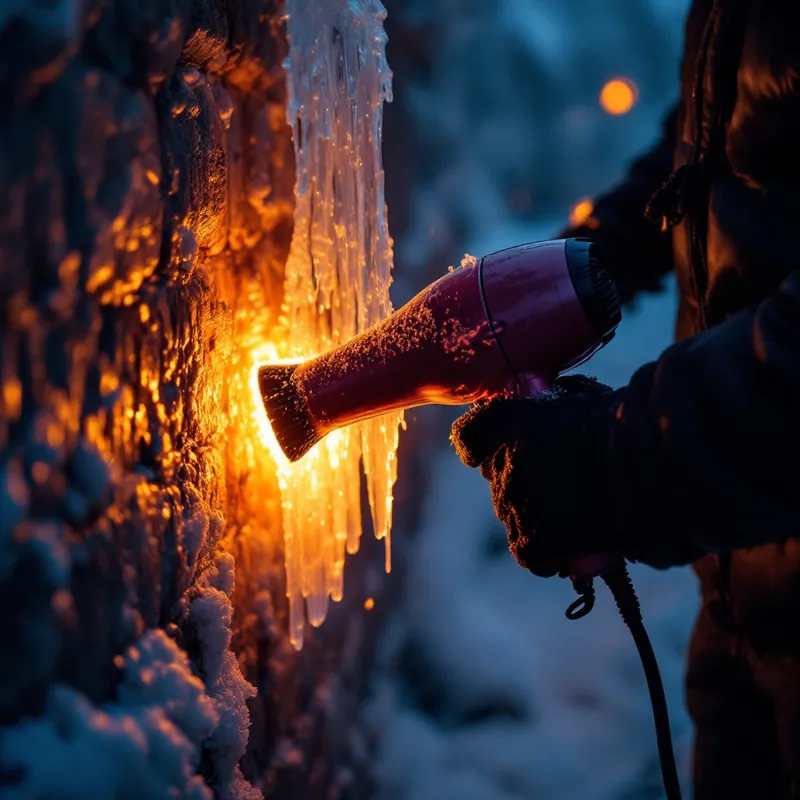
Use a hair dryer, heating pad, hot towels or a space heater kept clear of anything flammable. Start near the faucet and work toward the cold spot.
4. Never use a flame
No blowtorch, propane heater or open flame. It can crack the pipe, start a fire or produce carbon monoxide. Steady, gentle heat only.
5. Keep going until flow returns
Warm the pipe until full pressure comes back. Then check other faucets, if one pipe froze, others in the same cold area may be frozen too.
6. Call a pro if stuck
If you can't reach it, it won't thaw, or you find a leak, shut off the main valve and call a plumber, and a restoration crew if it flooded.
A Common Question
Will frozen pipes thaw on their own?
They can, but letting them is a gamble you don't want to take. The danger isn't the ice; it's the moment it melts.
- The crack is already there. If the freeze split the pipe, the leak only shows once the ice melts, and by then water is flowing through the break.
- No one is watching. Pipes often thaw hours later, sometimes in an empty house, so a slow leak can run unnoticed until there's real water damage.
- You lose control. Thawing deliberately with the faucet open lets you see the flow return, spot a leak immediately, and shut the water off fast.
Don't wait and hope
Treat any frozen pipe as urgent. Thaw it on purpose with the faucet open and an eye on it, never leave a frozen pipe to sort itself out in a cold, empty home.
Already flooded? Call 24/7If It Already Burst
What to do if a frozen pipe bursts
Shut off the water
Close your home's main shutoff valve immediately, then open lower faucets to drain the remaining water.
Cut the power
If water is near outlets, appliances or the panel, shut off electricity to the area, never wade into charged water.
Document it
Photograph and video the water and damage before cleanup, for your insurance claim.
Call for extraction
Get a 24/7 crew extracting and drying fast, before soaked materials are lost and mold begins.
Fix the pipe
Have a plumber repair the burst section so the water can go back on, while the crew dries the structure.
The full emergency walkthrough is on our burst pipe page, but the first move is always the same: shut the water off, then call.
Free Instant Tool
Frozen pipes: thaw it yourself, or call?
Tell us whether you can reach the frozen section and if there's any sign it has already burst, and get an instant read on what to do, whether it's safe to handle yourself, and the risk you're facing. It's a fast orientation while you decide, not a quote or a coverage promise; your policy and situation decide.
Never Again
How to prevent frozen pipes
Almost every frozen pipe is preventable with a little cold-weather prep. None of it is expensive; all of it beats a flood.
Keep the heat on
Hold the house at 55°F or above, even when you're away or asleep. A cold, empty house in winter is the classic setup for a freeze-and-burst.
Let faucets drip
On the coldest nights, a slow drip from taps fed by exposed pipes keeps water moving and relieves pressure so ice can't build up and split the line.
Open cabinet doors
Let warm room air reach the pipes under sinks, especially where plumbing runs along an exterior wall or into a cold corner.
Insulate exposed pipes
Foam pipe sleeves or heat tape on pipes in attics, basements, garages and crawlspaces protect the spots that freeze first.
Seal cold-air leaks
Close gaps and vents that let freezing wind blow across pipes, wind chill freezes a pipe far faster than still cold air.
Drain outdoor lines
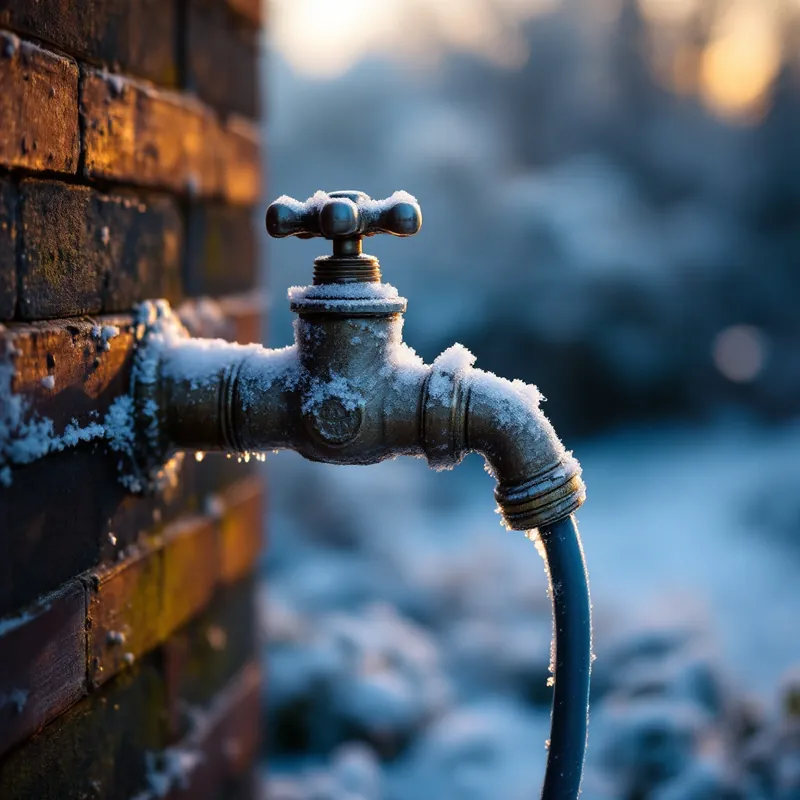
Disconnect hoses and drain spigots and irrigation before the first hard freeze so trapped water can't expand and burst the line.
Heading out of town in winter? Do all of the above and consider shutting off the water main and draining the pipes , or a smart leak-shutoff device, so a freeze can't flood an empty house.
Why It Turns Serious Fast
Why frozen-pipe damage needs fast restoration
A burst frozen pipe isn't a plumbing problem you can mop up, it's a water emergency where speed decides the cost. Here's why.
It hides in the structure
Frozen pipes usually burst inside walls, attics and ceilings, so the water soaks into framing, insulation and subfloor before you see it.
Mold follows fast
Left even a day, clean water grows mold and can pool in lower levels, turning a dry-out into a removal-and-rebuild job.
Insurance rewards speed
Because payout hinges on limiting further damage, fast extraction and good documentation protect both your home and your claim.
If It Bursts
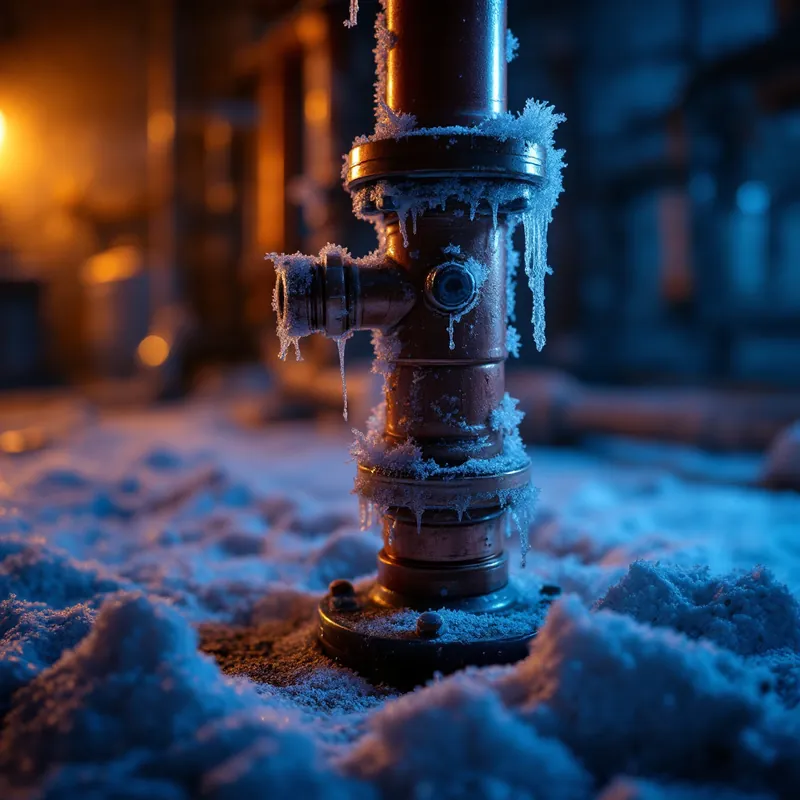
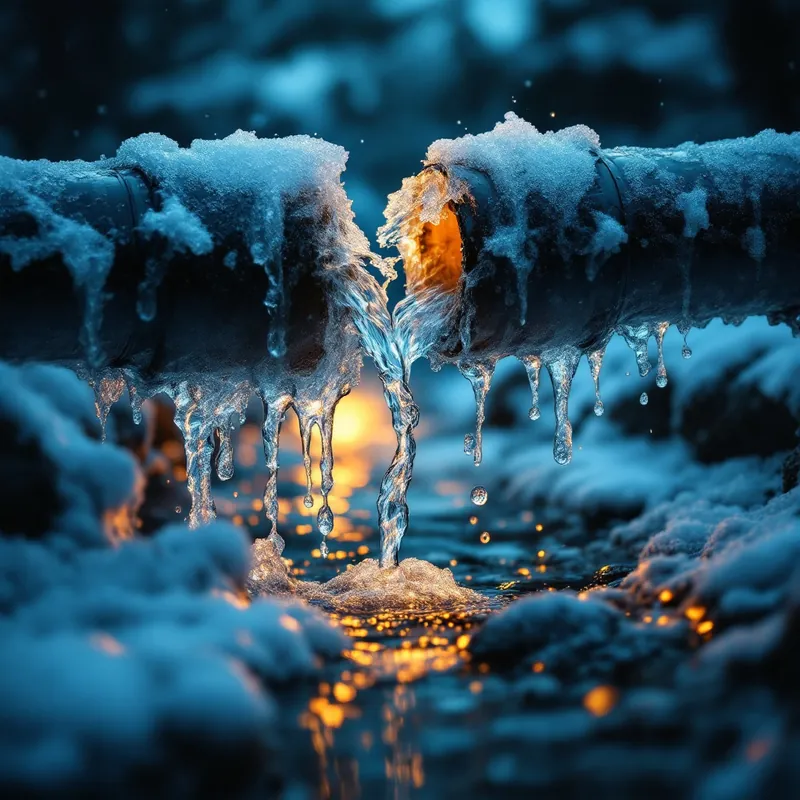
A frozen pipe, from the freeze to the fix
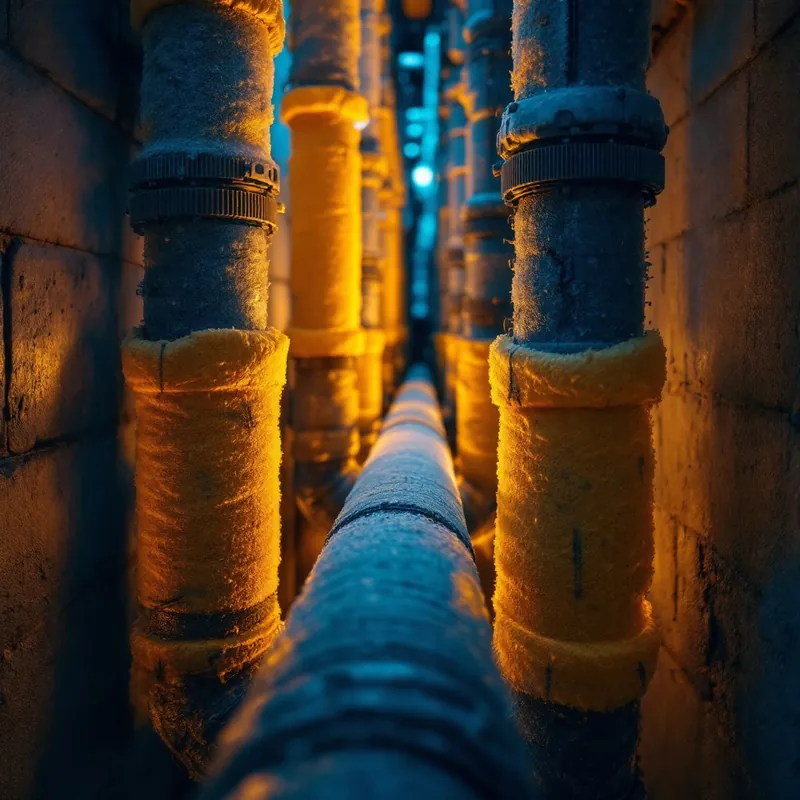
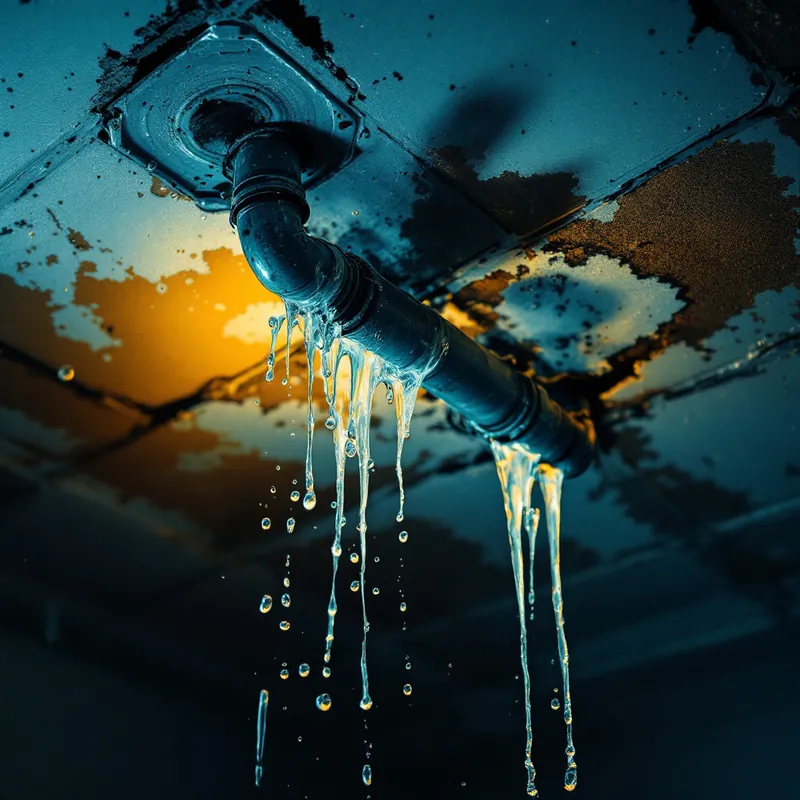
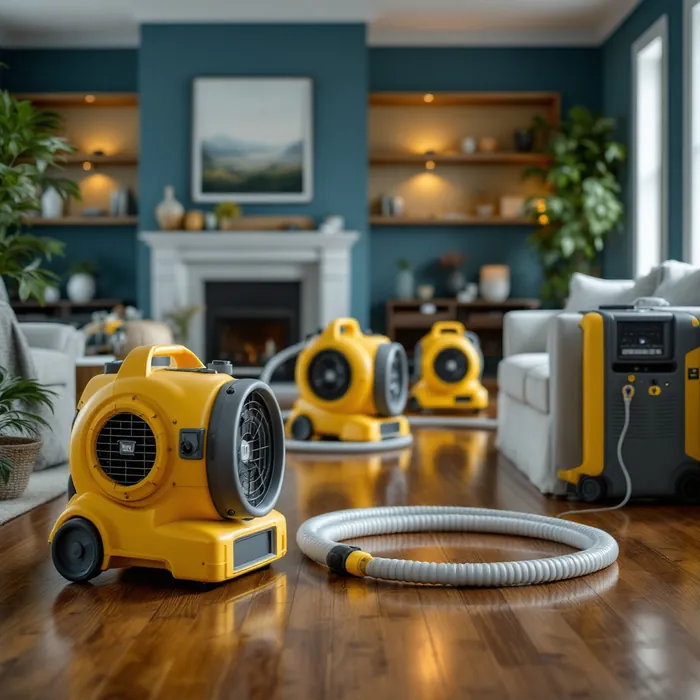
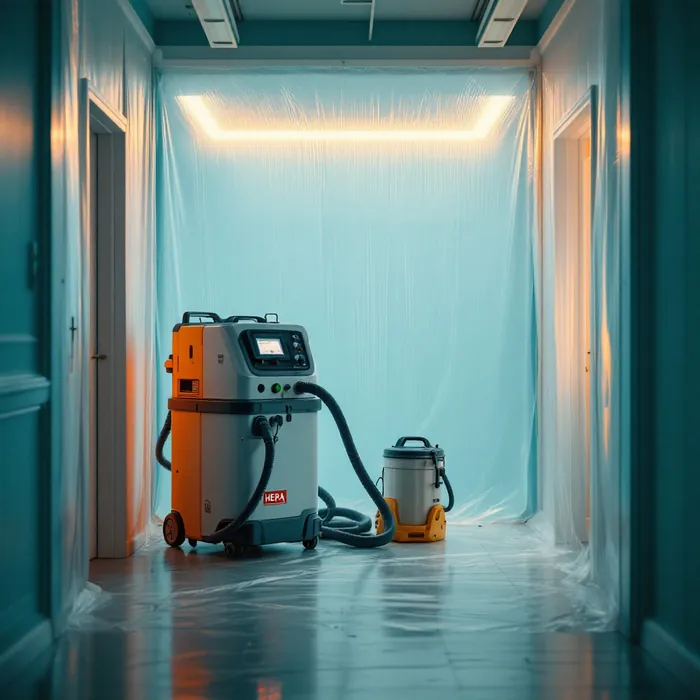
When a frozen pipe lets go inside a wall, the water hides in framing and insulation. This is the gear a crew brings to find and remove it, the difference between a proper dry-out and a mold problem next spring.
FAQ
Frozen pipe questions, answered
At what temperature do pipes freeze?
Pipes are at risk once the outdoor temperature drops to about 20°F (-6°C) or below, the widely used "temperature alert threshold." Exposed pipes in unheated attics, crawlspaces, garages and exterior walls freeze first. Wind chill and how long the cold lasts matter as much as the number itself.
How do I thaw a frozen pipe safely?
Open the faucet the pipe feeds, then apply gentle heat to the frozen section with a hair dryer, heating pad, hot towels or a space heater kept away from anything flammable. Work from the faucet toward the frozen spot. Never use an open flame or blowtorch. Keep heat on until full pressure returns.
Will frozen pipes thaw on their own?
They can, but letting them is risky. As ice melts, the pressure it built can push water out through any crack the freeze created, flooding the home when no one is watching. It's safer to thaw the pipe deliberately with the faucet open so you control the flow and spot a leak early.
What are the signs of a frozen pipe?
Little or no water from a faucet in cold weather, frost or condensation on a visible pipe, a bulge in the pipe, gurgling or clanking sounds, and a sewage or musty smell from a drain. If only one faucet is affected, its supply pipe is likely frozen somewhere upstream.
What should I do if a frozen pipe bursts?
Shut off your main water valve immediately, then cut power to the area if water is near anything electrical. Move valuables out of the water, photograph the damage for insurance, and call a 24/7 water damage restoration crew to extract the water and dry the structure before mold begins.
How long can pipes be frozen before they burst?
There's no fixed time, a pipe can burst as soon as enough ice forms to build pressure, or hold for hours. Because you can't predict it, treat any frozen pipe as urgent: thaw it promptly with the faucet open, and don't leave a frozen pipe unattended in a cold, empty house.
Sources & Standards
Thawing and prevention guidance reflects the American Red Cross, Preventing and Thawing Frozen Pipes and Ready.gov winter-weather preparedness, with cold-weather and flood-safety context from the National Weather Service. Restoration follows the IICRC S500 Standard; where a burst pipe's water threatens mold, cleanup thresholds reference the US EPA and the CDC. Whether the resulting water damage is covered depends on your policy, see the FEMA National Flood Insurance Program. See our editorial standards for how we research and review.
Keep Reading
Related water damage help
Burst pipe
The full emergency walkthrough for when a frozen pipe has already let go.
Water mitigation
The fast first steps that stop a burst pipe's damage from spreading.
Restoration cost guide
What drying and rebuilding after a winter burst costs in 2026.
Appliance leaks
Water heaters and washers are another top cold-weather flood source.
Mold remediation
What to do if a freeze flooded the house and mold has started.
Water damage restoration
Our full 24/7 emergency water removal, drying and repair service.
A frozen pipe that bursts floods fast, we're ready
Pipe burst? Get a crew now
Shut off your water, then call. A certified crew extracts, dries and documents the damage, on call 24/7 across the US.
Call (888) 217-7423Why the first call matters
The first-hour match — water damage is priced by the hour it sat, not by the hour you called
Standing water stops being the problem within a day. What it leaves behind — saturated drywall, wet insulation, a subfloor that keeps giving moisture back into the room — is what the invoice is actually made of, and it grows while the house looks calm.
That is not a failure of homeowners who waited. It is how the trade is arranged: you call a company, it comes when its schedule allows, and the clock keeps running in between. Our line is open every day of the year, and the call reaches an independent licensed and insured restoration company that covers your area now rather than tomorrow. We do not do the work ourselves — we are paid for the introduction, which is set out in how we make money.
Two things decide what this costs, and both are settled in the first hours. Moisture readings and photographs taken before anything is torn out are what an adjuster later accepts or disputes, and mold needs only a day or two of damp material to start. Neither waits for an appointment. And if the water came from outside — a river, a storm surge, groundwater — say so on the call. That is flood, a separate policy that a homeowners policy does not cover, and you should hear it from us before anyone arrives rather than after.