Ceiling Water Damage
Ceiling Water Damage? Find the leak, fix it right
A brown ring or sagging patch on the ceiling means water is getting in from above, and it won't stop on its own. We connect you with crews who trace the source, dry the cavity and repair the ceiling properly, not just paint over the symptom.
No obligation · Insurance-friendly · Independent licensed & insured local companies
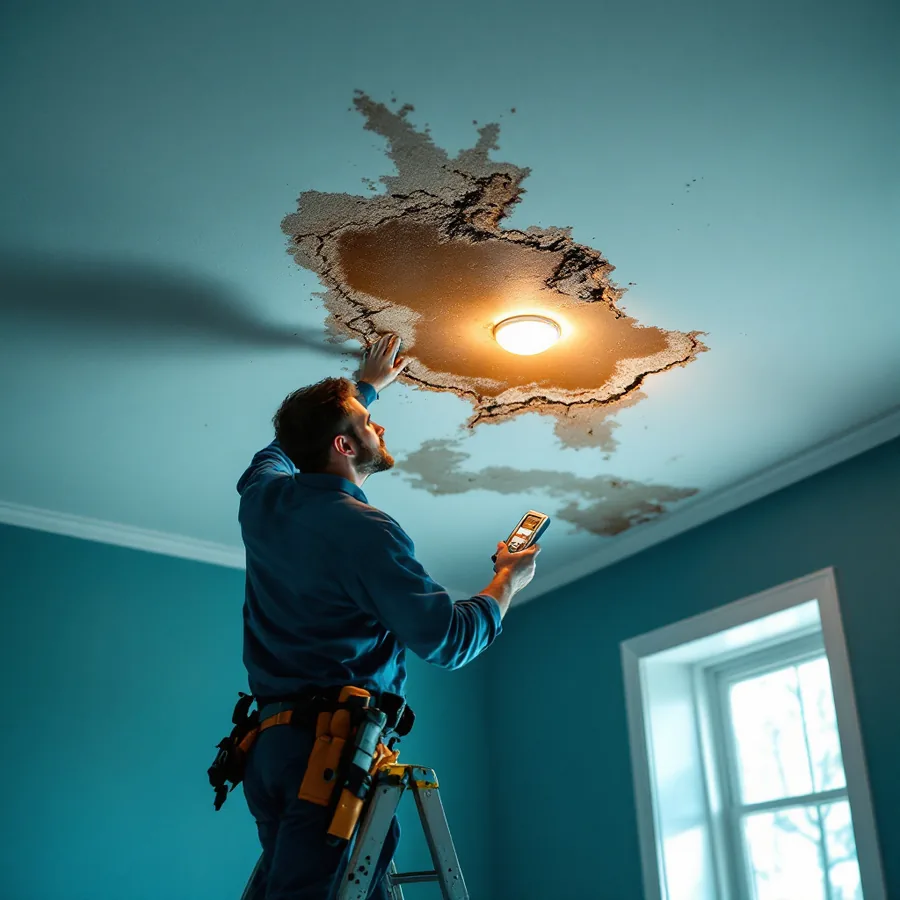 Leak diagnosis & ceiling repair
every day of the year
Where It Comes From
What causes water damage on a ceiling
Water travels along framing before it drips through, so the stain is often not directly under the source. Finding the true origin is the whole job, these are the usual suspects.
Roof leak
Damaged shingles, flashing or a storm breach let rain into the attic, where it soaks insulation and shows up as a ceiling stain below.
Plumbing leak above
A leaking supply line, drain or a bathroom on the floor above is one of the most common causes of a ceiling stain.
HVAC condensation
A clogged AC condensate line or a sweating duct in the attic drips onto the ceiling, often in summer.
Ice dams
In winter, ice at the roof edge forces meltwater back under the shingles and into the ceiling below.
Appliance or tub overflow
An overflowing tub, toilet or washing machine upstairs sends water straight through the floor into the ceiling.
Condensation & humidity
Poor attic ventilation and chronic humidity can leave moisture and staining even without a single dramatic leak.
Read the Warning Signs
How serious is your ceiling damage?
A faint stain and a sagging, dripping ceiling are very different situations. Here's how to read what you're seeing.
Brown or yellow stains
Rings and discoloration mean water has passed through. Fresh, growing or darkening stains point to an active leak above.
Sagging or bulging
A drooping or bubbling ceiling is holding trapped water and can collapse, keep clear of the area and treat it as urgent.
Peeling & cracking
Flaking paint, cracked plaster and soft, crumbling drywall show the material is saturated and failing, not just marked.
Musty smell or mold
A musty odor or visible dark spotting means mold has already started in the damp cavity above the ceiling.
The Costly Mistake
Why you can't just paint over a water stain
It's tempting to grab a can of paint and make the stain disappear, but painting over ceiling water damage treats the symptom and leaves the real problem working behind it.
The leak is still there
Paint does nothing to the source above. The next rain or run of the shower brings the water , and the stain, right back.
It bleeds back through
Water stains contain tannins that bleed through ordinary paint. Without drying and a stain-blocking primer, the mark reappears within days.
Mold keeps growing
Sealing wet material with paint traps moisture and feeds mold in the cavity, turning a stain into a health and structural problem.
The right sequence is always the same: find and fix the source, dry the cavity, remove any failed or moldy material, then repair and refinish with a proper stain-blocking primer. Do it in that order and the ceiling stays fixed.
Step One
How we find the source of a ceiling leak
Because water travels, guessing where it came from is how ceilings get "fixed" twice. Crews trace it back objectively.
Moisture mapping
Moisture meters read exactly how far the wet area extends, usually well beyond the visible stain.
Thermal imaging
Infrared cameras reveal cool, damp paths in the ceiling and above it, tracing moisture toward its origin.
Cavity & source inspection
We check the roof, plumbing and HVAC above the stain and inspect the ceiling cavity to confirm the true source before any repair.
How It Works
How ceiling water damage is repaired
Fix the source
Trace and repair the roof, plumbing or HVAC leak first, or the damage returns.
Dry the cavity
Dry the ceiling, insulation and space above with air movers and dehumidifiers.
Remove damage
Cut out sagging, crumbling or moldy drywall and plaster rather than covering it.
Check for mold
Inspect the cavity and remediate any mold that grew while it was wet.
Repair & refinish
Replace drywall, seal with stain-blocking primer, then texture and paint to match.
Free Instant Tool
Ceiling water damage: cosmetic or serious?
Tell us what the ceiling looks like and whether you've found the source, and get an instant read on the risk level, the structural concern, and your best next step. It's a fast orientation while you decide whether to call, not a quote or a coverage promise. Your own policy and situation decide.
Repair Cost
What affects your ceiling repair cost
A small stain that just needs sealing and a collapsed, moldy ceiling section are very different jobs, the inspection that prices yours is free. Here's what moves the number:
- Size of the damage. Sealing a small stain is inexpensive; replacing a large sagging section costs more.
- Whether drywall is replaced. Saturated, cracked or moldy ceiling material must be cut out and rebuilt, not painted.
- Fixing the source. The roof, plumbing or HVAC repair above the ceiling is a separate but essential part of the job.
- Mold. If moisture sat long enough to grow mold in the cavity, remediation adds to the scope.
- Finish & access. Textured ceilings, high ceilings and color-matching add labor to the refinishing.
Insurance
Does insurance cover ceiling water damage?
As with any water loss, it comes down to sudden vs. Gradual. Insurers cover accidents, not neglected maintenance.
- Often covered. A burst pipe above the ceiling or a storm-driven roof leak, sudden, accidental events.
- Usually not. A slow leak that was ignored for months, or damage from deferred roof or HVAC maintenance.
- Documentation helps. Photos, the moisture readings and the identified source strengthen the claim.
Act quickly either way
The longer a ceiling leak runs, the more it looks like a maintenance issue and the harder it is to claim, and the more damage and mold it causes. Fast diagnosis and documentation protect both your home and your coverage.
Get a on-site inspectionPro-Grade Equipment
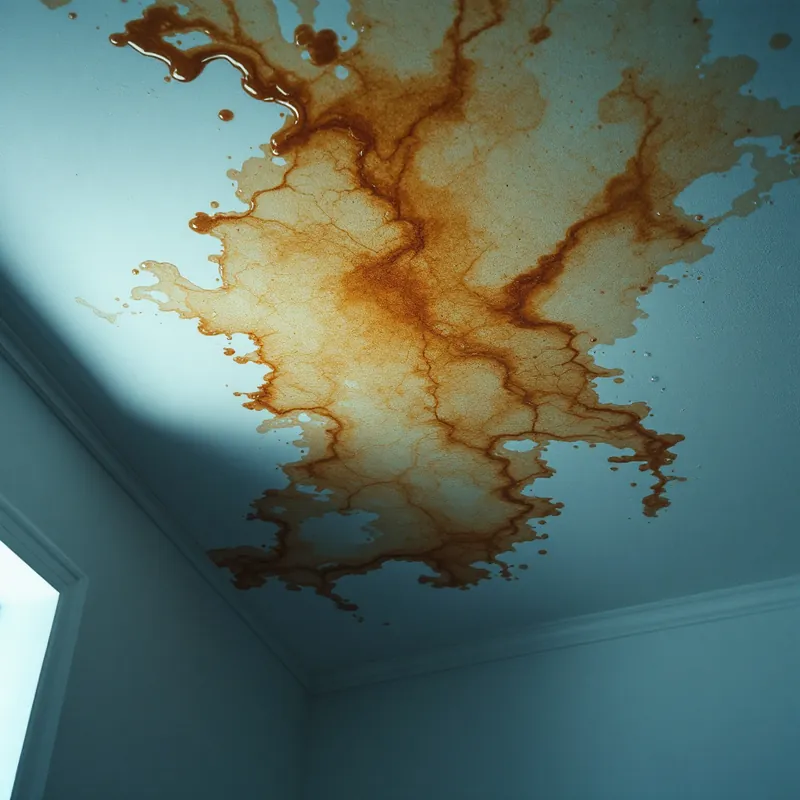
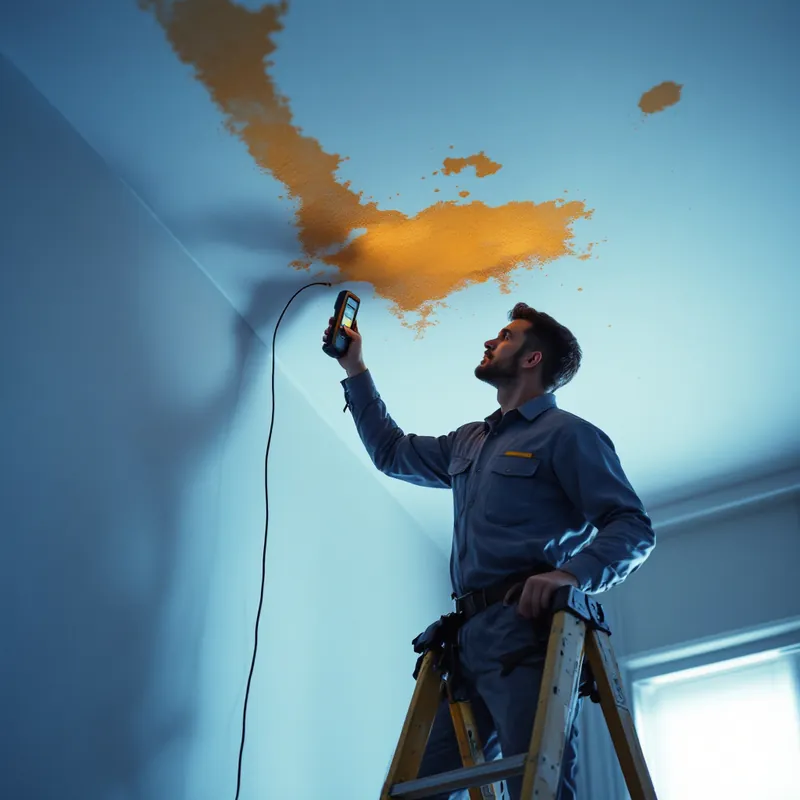
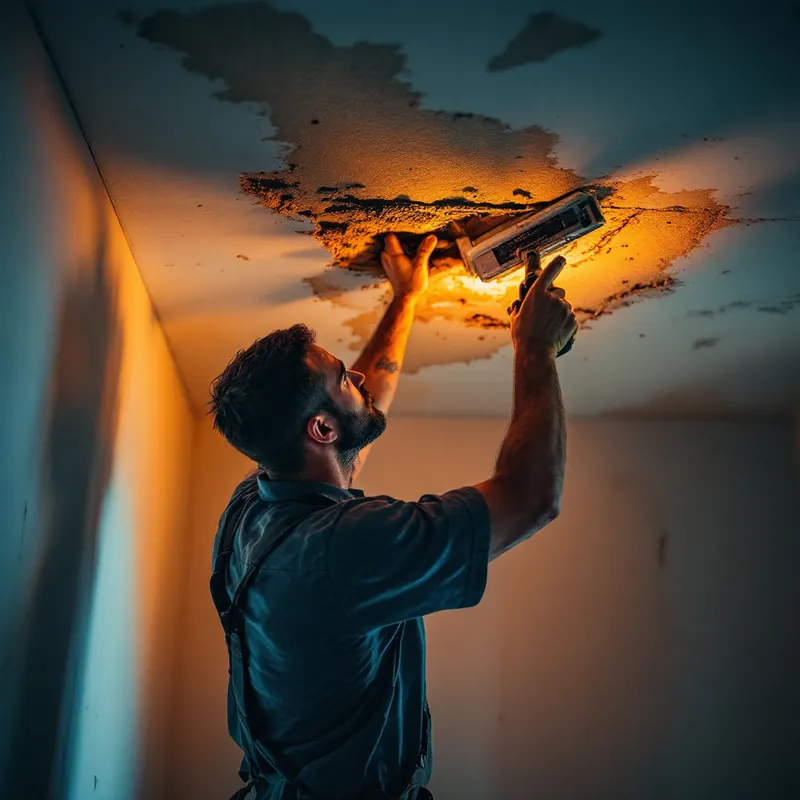
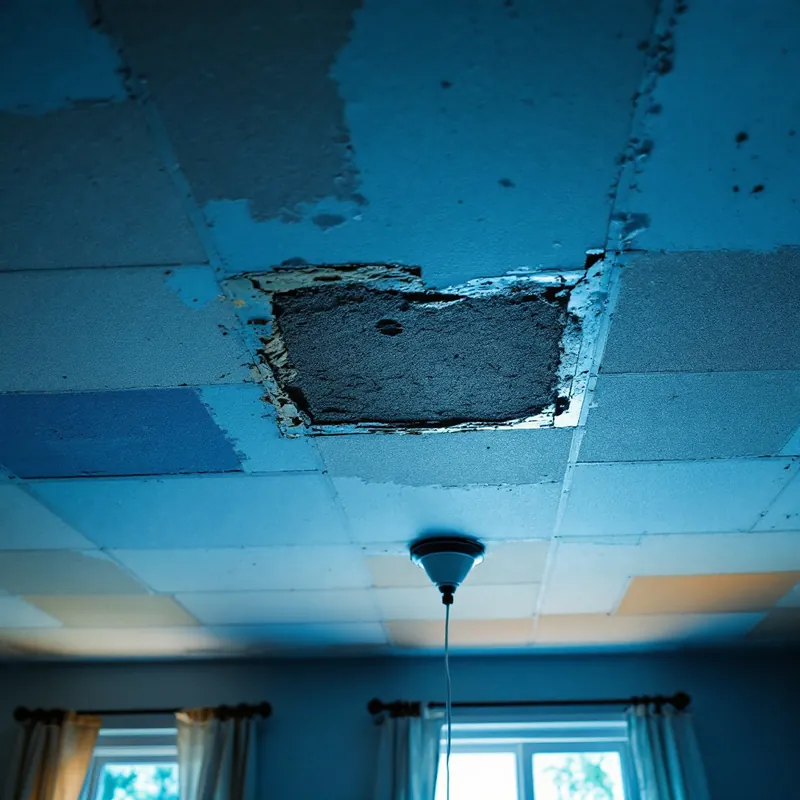
A ceiling leak, from the stain to the fix
Fixing a ceiling properly takes leak-detection and drying equipment, not a can of stain-block and a hope it holds.






FAQ
Ceiling water damage questions, answered
What causes water damage on a ceiling?
The most common causes are a roof leak, a plumbing or drain leak from a bathroom or pipe above, HVAC condensation, an ice dam in winter, or an appliance overflow on the floor above. Because water travels, the stain is often not directly below the source.
Is a water-stained ceiling dangerous?
A stain itself is a warning sign, but a sagging or bulging ceiling holding trapped water can collapse and should be treated as urgent. Prolonged moisture also grows mold above the ceiling. Both are reasons not to ignore it.
Can I just paint over a water stain on the ceiling?
No. Painting over a stain hides the symptom but leaves the leak, the trapped moisture and any mold in place, so it bleeds back through and keeps spreading. The source must be fixed and the area dried before any stain-blocking primer and paint.
How much does ceiling water damage repair cost?
It depends on how much ceiling is affected, whether the drywall must be replaced, if there's mold, and the cost of fixing the source above. A small stain that just needs sealing is inexpensive; a collapsed, moldy ceiling section is more. An on-site inspection gives an exact figure.
Does homeowners insurance cover ceiling water damage?
Sudden, accidental causes , a burst pipe or a storm-driven roof leak, are typically covered. Damage from a slow, long-ignored leak or lack of maintenance is usually denied. Documenting the cause and acting quickly supports the claim.
How do you find the source of a ceiling leak?
Crews use moisture meters and thermal imaging to trace moisture back to its origin, check the roof, plumbing and HVAC above the stain, and inspect the ceiling cavity, because water often travels along framing before it drips through.
Sources & Standards
Drying and water categories follow the IICRC S500 standard. Mold guidance: US EPA , Mold Cleanup and CDC, Mold. Roof, ice dam and storm context: Ready.gov, Severe Weather, Ready.gov, Winter Weather & Ice Dams and FEMA, Flood Insurance.
A ceiling stain won't fix itself, the leak is still running
Get your ceiling leak found & fixed
On-site diagnosis, real leak tracing, insurance-friendly documentation, crews on call 24/7 across the US.
Call (888) 217-7423Why the first call matters
The first-hour match — water damage is priced by the hour it sat, not by the hour you called
Standing water stops being the problem within a day. What it leaves behind — saturated drywall, wet insulation, a subfloor that keeps giving moisture back into the room — is what the invoice is actually made of, and it grows while the house looks calm.
That is not a failure of homeowners who waited. It is how the trade is arranged: you call a company, it comes when its schedule allows, and the clock keeps running in between. Our line is open every day of the year, and the call reaches an independent licensed and insured restoration company that covers your area now rather than tomorrow. We do not do the work ourselves — we are paid for the introduction, which is set out in how we make money.
Two things decide what this costs, and both are settled in the first hours. Moisture readings and photographs taken before anything is torn out are what an adjuster later accepts or disputes, and mold needs only a day or two of damp material to start. Neither waits for an appointment. And if the water came from outside — a river, a storm surge, groundwater — say so on the call. That is flood, a separate policy that a homeowners policy does not cover, and you should hear it from us before anyone arrives rather than after.